


What to Wear Golfing: A Simple Guide for UK Courses

So, what should you wear for a round of golf? The short answer is a collared polo shirt, smart trousers or shorts, and proper golf shoes. Get that combination right, and you'll look the part on pretty much any course in the UK, from the first tee to the final putt.
Your Essential Guide to Golfing Attire
Stepping onto the first tee can be a bit daunting, and it's not always about the swing. The unspoken rules of what to wear are steeped in history and etiquette, all designed to uphold a certain respect for the game. But don't worry, it's not as stuffy as it sounds. Today, that tradition blends seamlessly with modern performance fabrics, creating a look that's both smart and genuinely functional.
Getting your golf attire right is your ticket to feeling comfortable and confident out on the course. It’s not about splashing out on expensive brands; it's about making appropriate choices. Think of it as a uniform that shows you respect the environment you're in.
The core pieces—a collared shirt, tailored trousers or shorts, and golf shoes—are the non-negotiables. They form the foundation of any outfit that will see you welcomed everywhere, from your local pay-and-play to a more exclusive private club.
Building Your Core Golf Outfit
The good news is that putting together a golf-ready wardrobe is pretty straightforward. The focus is on clean lines, a comfortable fit, and materials that let you move without restriction.
While many traditional UK clubs still have a smart-casual code, the game has fully embraced technical apparel that actually helps you play better without sacrificing style. This is clear from the UK's golf apparel market, which has seen huge growth in spending on things like performance polos and pullovers. It shows that UK golfers want clothes that tick the dress code box and stand up to the demands of a proper athletic activity.
For anyone new to the game, here's a simple breakdown:
Tops: A polo shirt with a collar is the gold standard for both men and women. Standard T-shirts are almost always a no-go.
Bottoms: Tailored trousers (like chinos) or smart, well-fitting shorts are what you need. Denim, cargo shorts, and sportswear like joggers are definite no's.
Footwear: You absolutely need shoes designed for golf. They can be spiked or spikeless, but trainers are not allowed as they can scuff up the delicate greens.
By sticking to these basics, you can easily pull together an outfit that looks great and is perfectly appropriate. For a deeper dive into pairing comfort with on-course elegance, check out these expert tips on golf apparel and style.
To make things even clearer, here’s a quick checklist summarising the essentials for a typical UK golf course.
At-a-Glance Golf Attire Checklist
This table gives you a quick rundown of what’s generally required, what’s recommended for comfort and performance, and what you should definitely leave at home.
Category | Essential Items (Must-Haves) | Recommended Additions | Items to Avoid |
|---|---|---|---|
Tops | Collared Polo Shirt | Lightweight Sweater or Quarter-Zip, Waterproof Jacket | T-Shirts, Football Shirts, Vests, Hoodies |
Bottoms | Tailored Trousers or Chinos, Smart Tailored Shorts | Waterproof Trousers, Belt | Jeans, Cargo Trousers/Shorts, Tracksuit Bottoms |
Footwear | Golf Shoes (Spiked or Spikeless) | Golf Socks | Trainers, Sandals, Boots, Formal Shoes |
Headwear | Optional | Baseball Cap, Visor, Beanie (in cold weather) | Non-golf hats (e.g., novelty hats) |
Extras | Optional | Golf Glove, Sunglasses, Sun Cream | Inappropriate accessories |
Think of this as your cheat sheet. Stick to the "Essentials" and "Recommended" columns, and you can't go wrong. It’s all about showing respect for the course and the other players while making sure you’re comfortable enough to play your best.
Understanding Golf Club Dress Codes
Figuring out a golf club's dress code can feel like the first real test of the day, long before you’ve even swung a club. But these rules aren't there to trip you up; they’re born from a deep-rooted tradition of respect for the game, the course, and the other players. Think of it less as a list of restrictions and more as a shared understanding that helps keep the unique atmosphere of golf alive.
At its heart, it’s all about maintaining a smart, tidy look. You'll often see the term 'smart casual', but what does that really mean when you’re pulling an outfit together? Simply put, it means swapping overly casual gear like denim, football shirts, and trainers for clothes actually designed for the sport—think collared shirts and tailored trousers or shorts.
This tradition is a huge part of what gives the game its distinct identity. And while the specifics might change from club to club, the basic principles ensure a certain level of decorum is kept, making the whole experience better for everyone.
Decoding the Dress Code Spectrum
Not all golf clubs are cut from the same cloth, and their dress codes often reflect their individual character. Here in the UK, you’ll find a whole spectrum, from the ultra-traditional to the much more laid-back.
Private Members' Clubs: These places usually have the strictest rules. Expect a firm requirement for tucked-in collared shirts, tailored trousers or shorts of a specific length, and often a ban on using your phone on the course itself.
Semi-Private and Resort Courses: These are typically a bit more relaxed. The core rules (collars on, no denim) still apply, but they might be more lenient on things like whether your shirt absolutely has to be tucked in.
Public and Municipal Courses: As the most accessible courses, these tend to have the most relaxed dress codes. Even so, they’ll almost always draw the line at jeans and football shirts to protect the course and maintain a proper golfing environment.
The golden rule? Always check the club’s website before you go. Most have a 'Visitors' section with clear guidelines on their dress code, which can save you from a potentially awkward chat in the pro shop.
The Non-Negotiable Attire Rules
While some rules are flexible, a few items are almost universally accepted or banned on UK courses. Nailing these basics is your ticket to fitting in seamlessly.
First up, your top. A collared polo shirt is the undisputed king of the golf course for both men and women. Some modern clubs might allow mock-neck or blade-collar styles, but you can never, ever go wrong with a traditional polo. T-shirts are a definite no-go.
For your bottom half, the keyword is 'tailored'. This means smart trousers, chinos, or tailored shorts. What you must steer clear of are denim, cargo shorts with those bulky external pockets, and any kind of athletic wear like joggers or tracksuit bottoms.
Finally, your headwear. If you wear a cap, make sure the peak is always facing forwards. Turning it backwards is a classic rookie mistake that traditional clubs really don't like.
This simple decision tree can help you quickly check if your outfit ticks the basic boxes.
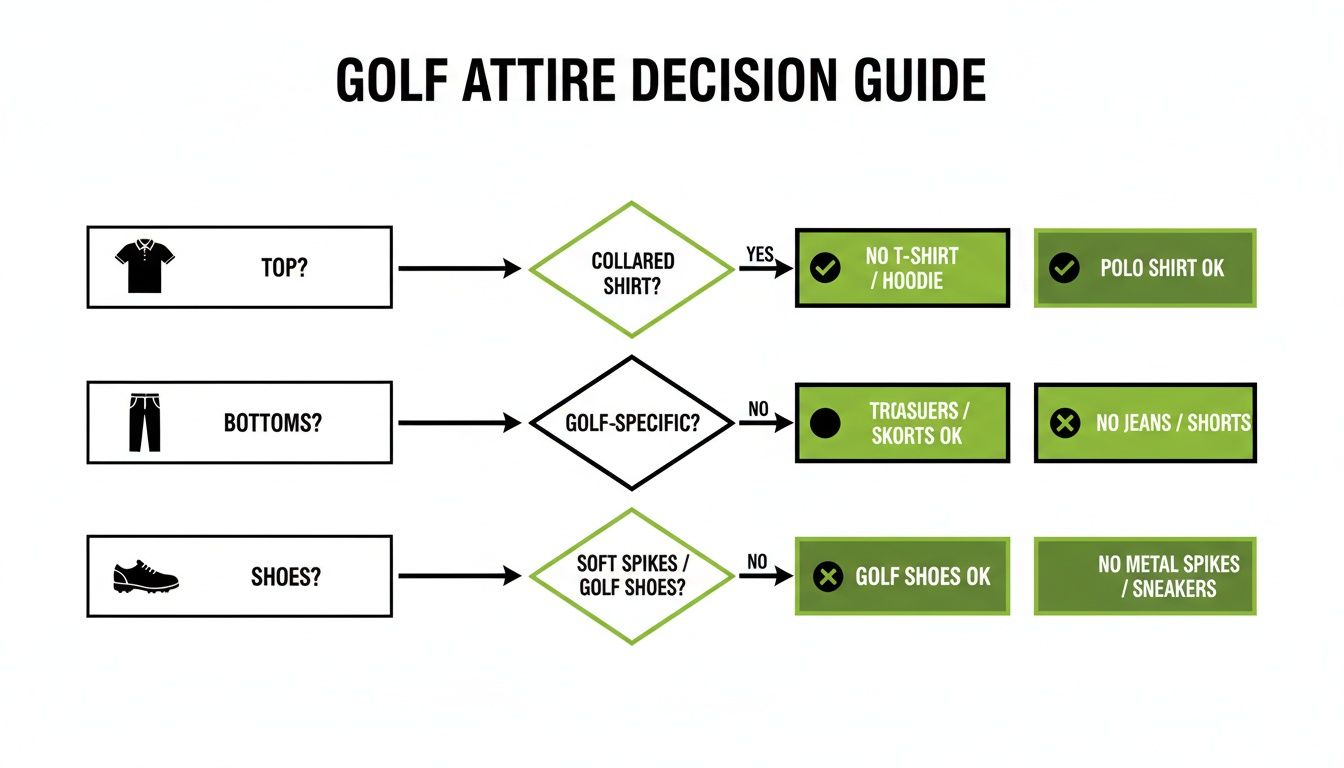
As the guide shows, the foundation of any solid on-course outfit is simple: a collared polo, tailored bottoms, and proper golf shoes. Get that right, and you're good to go.
On-Course vs Clubhouse Attire
One thing that often catches new players out is the difference between what you can wear on the course and what’s expected in the clubhouse. In many cases, the clubhouse has a slightly more formal dress code, especially in the bar or dining room later in the day.
The general rule is simple: what is acceptable on the course is usually fine in the clubhouse during the day. However, some items worn for play, like caps and golf shoes, are often not permitted inside.
It's always a good idea to have a pair of casual shoes—like loafers or smart trainers—to change into. Most clubs also expect you to take your hat off indoors. While these traditions are still going strong, some clubs are taking a more modern view; for an interesting take on this, you can read more about how golf’s sacred dress code is evolving. Understanding this small but important distinction shows you respect every part of the club, from the first tee to the 19th hole.
Building Your All-Weather Golf Wardrobe

Anyone who's played golf in the UK knows you can get three seasons in a single round. One minute the sun is beating down, the next a stiff breeze picks up, and before you can finish the hole, a drizzle sets in. This is exactly why a smart, adaptable wardrobe is one of the most important bits of kit you can own.
The secret is to think about your golf gear as a complete system, not just a collection of individual items. It's about building a wardrobe where pieces work together seamlessly, allowing you to add or strip away warmth and protection without ever messing with your swing. Your goal is to control your own microclimate, keeping your mind on the game, not the weather.
Dressing for Warmer Rounds
Summer golf means long, glorious days on the course, but it brings its own challenges—from blazing sun to those infamous sudden downpours. Comfort is everything, so the game plan shifts to breathable fabrics and solid UV protection.
A lightweight, moisture-wicking polo is your best mate out there. Look for technical materials that actively pull sweat away from your skin, keeping you cool and dry through all 18 holes. Pair it with tailored shorts or lightweight trousers made from a performance fabric with plenty of stretch, and you'll keep your full range of motion even when things get sticky.
A classic rookie error is thinking a hat and some sun cream are enough. So much of today's best golf gear, like the pieces in the Off The Tee Golfwear collection, has UPF (Ultraviolet Protection Factor) built right into the fabric. It's an extra, effortless layer of defence for those long afternoons chasing birdies.
And whatever you do, don't leave home without a lightweight waterproof jacket stashed in your bag. A pop-up summer shower can leave you soaked in minutes, but a good packable jacket offers instant shelter without adding bulk or making you overheat.
Mastering Cooler Weather with Layering
As the seasons turn in spring and autumn, mastering the art of layering becomes absolutely essential. This is the strategy that lets you adapt to those wild temperature swings on the fly, so you're never too hot or too cold. It’s a simple, proven system built on three core layers.
The layering system is a game-changer for golfers who play year-round. Below is a quick guide to help you build the perfect outfit for any transitional or winter weather using this three-part strategy.
Seasonal Golf Layering System
Layer Type | Purpose | Spring/Autumn Examples | Winter Examples |
|---|---|---|---|
Base Layer | Manages moisture by wicking sweat away from the skin to keep you dry. | A thin, long-sleeved technical top. | A thermal compression top. |
Mid-Layer | Insulates by trapping body heat to keep you warm. | A quarter-zip pullover, gilet, or performance fleece. | A thicker fleece or an insulated jacket/vest. |
Outer Layer | Protects from the elements (wind and rain). | A lightweight, packable windproof and waterproof jacket. | A fully seam-sealed, heavy-duty waterproof jacket. |
With this system, you can start a crisp autumn morning with all three layers on, then easily shed your mid-layer as the sun comes out. It’s all about having options ready to go in your bag.
This approach gives you total control. On a blustery spring day, you might start with all three layers, peel off the mid-layer as the sun breaks through, and put it back on if the wind picks up on the back nine. For a deeper dive into this, check out our full guide on how to prepare for UK autumn golf with the right gear and tips.
Conquering the Cold Winter Round
Winter golf demands serious protection from the cold, wind, and damp—without making you feel like the Michelin Man. The layering system is still your foundation, but you'll be reaching for more substantial, specialised pieces for each layer.
Kick things off with a proper thermal base layer designed specifically for cold weather. Your mid-layer might be a thicker, heavier fleece or even a specialised insulated jacket. But the real non-negotiable is your outer layer—it must be fully waterproof and windproof. When your gear needs to stand up to the worst of the weather, you can’t cut corners; you might want to explore options from a rain check collection to find truly reliable outerwear.
Winter trousers, often lined with fleece for extra warmth and treated with a water-repellent finish, are another fantastic investment. Top it all off with a warm beanie, a good pair of winter golf gloves, and thermal socks, and you'll stay comfortable from head to toe. This is why golfers are investing more in their gear; in fact, UK spending on golf equipment and apparel was estimated at around USD 709.36 million in 2025, driven by the demand for technical garments that respect tradition while delivering modern performance.
Selecting Performance Fabrics and Footwear
Modern golf clothing is so much more than just a uniform to satisfy club rules; it’s a genuine piece of performance equipment. The days of slogging through a round in heavy, restrictive cottons are long gone, thankfully replaced by advanced technical fabrics engineered to help you play your best.
Think of your clothing as a silent partner out there on the course, working hard to keep you comfortable so you can focus entirely on your next shot. This shift is all about gaining a real-world advantage. It means choosing a polo that won’t feel damp and heavy on the 18th green, or trousers that let you finish your backswing without the slightest hint of restriction.
The Tech in Your Golf Wardrobe
The real magic of today’s golf apparel is happening at a microscopic level. Specialised fibres and weaves are designed to tackle the exact challenges a golfer faces over four hours, from the intense summer sun to a sudden downpour.
Once you understand what these fabrics are actually doing, it will completely change how you shop for your gear.
Moisture-Wicking Power: Imagine your shirt acting like a high-tech sponge, actively pulling sweat away from your skin and pushing it to the surface to evaporate. That's moisture-wicking in a nutshell. It keeps you dry, prevents chafing, and helps regulate your body temperature – all essential for maintaining comfort and concentration. You can see just how effective these fabrics are in our guide to the best golf clothes for keeping cool.
Four-Way Stretch Freedom: A golf swing is a complex, athletic movement. Four-way stretch fabric, which you’ll find in quality polos and trousers, moves with you in every single direction. This total freedom of movement is absolutely crucial for generating power and keeping your swing smooth and consistent.
Built-in UV Protection: Many performance garments now come with a UPF (Ultraviolet Protection Factor) rating woven directly into the fibres. This gives you a reliable, built-in shield against harmful rays during those long summer rounds.
These technologies are no longer niche features; they are the standard for any serious golfer's wardrobe. They deliver tangible benefits that help you perform at your best, whatever the weather throws at you.
The Foundation of Your Swing: Your Shoes
Your connection to the ground is the single most important part of your swing. That makes your footwear arguably the most critical piece of equipment you'll own. The right golf shoe provides a stable base, letting you generate power from the ground up while preventing slips on damp turf.
The choice really comes down to two main types, each with its own clear advantages.
Spiked vs Spikeless: A Modern Debate: Traditional spiked shoes offer maximum grip, using plastic cleats that dig into the turf – perfect for hilly or wet courses. Modern spikeless shoes, however, use a series of rubberised lugs and traction patterns. They provide excellent grip but with far greater comfort and versatility, letting you walk straight from the 18th green into the clubhouse.
For golfers in the UK, waterproofing is a complete non-negotiable. Dewy morning fairways and unexpected showers are a fact of life, and wet feet are a fast track to a miserable round. Always look for shoes with a waterproof guarantee to keep you dry and comfortable.
The UK golf scene is also seeing a shift, with a growing demand for sustainable and eco-friendly products. Industry reports show that many golfers now actively look for apparel made from recycled fabrics. This trend, coupled with rising numbers of female and junior players, is shaping a market that values both high-tech performance and environmental responsibility. You can read more on these evolving market trends to see how today’s choices are shaping tomorrow's gear.
Ultimately, choosing your gear is about finding that perfect balance between tradition and technology. By picking fabrics that work for you and footwear that provides a solid foundation, you’re not just dressing for a game of golf—you’re equipping yourself for success.
Accessorising Your Outfit for Form and Function
The right accessories are far more than just the finishing touches on your outfit. Think of them as essential tools, the final, crucial layer of your gear that can genuinely impact your performance out on the course.
From giving you a better grip to shielding you from the sun, these pieces are a blend of personal style and pure practicality. It’s all about picking items that not only look the part but serve a real purpose, helping you play your best while staying comfortable over all 18 holes.
Headwear for Every Condition
A hat is one of the most useful accessories you can have in your bag, but which one you reach for should depend entirely on the day's weather. It's smart to have a couple of options ready to go.
Caps: There’s a reason the classic baseball cap is the go-to choice. It keeps the sun out of your eyes and off your face, cutting down glare when you’re lining up a crucial putt or trying to track your ball against a bright sky.
Visors: When it’s a scorcher and a full cap feels too warm, a visor is the perfect alternative. You get the same sun protection for your eyes without trapping heat, letting the air flow to keep you cool.
Beanies: For anyone braving winter golf in the UK, a thermal beanie is an absolute game-changer. You lose a surprising amount of heat through your head, and a good beanie keeps you warm and focused when the temperature plummets.
At the end of the day, the goal is simple: keep the sun out of your eyes and your head comfortable so you can concentrate on your game.
Essential Gear for Grip and Comfort
Beyond what’s on your head, a few other accessories are considered non-negotiable by most serious golfers. These are the items that give you a tangible edge from your very first swing.
The golf glove is arguably the most vital accessory of them all. Worn on your non-dominant hand (so, on your left hand if you’re right-handed), it’s all about creating a secure, consistent grip. This stops the club from twisting in your hands during the swing, which is fundamental for power and accuracy. A quality leather or synthetic glove makes a massive difference, especially when things get a bit damp.
A good belt is more than just a fashion statement, too. It’s there to make sure your trousers or shorts stay exactly where they should be through all the twisting and turning of a golf swing. Whether you go for classic leather or a modern woven style, make sure it pulls your whole look together.
Don’t overlook your socks. High-performance golf socks made from moisture-wicking materials are a lifesaver. They keep your feet dry to prevent blisters and provide cushioning that you’ll be thankful for after walking the course for four hours.
Sunglasses and Final Touches
The final pieces of the puzzle are about sharpening your vision and polishing your look. These days, a good pair of sunglasses is a legitimate piece of high-performance equipment.
Look for sunglasses with lenses specifically designed for golf. Certain tints can actually boost contrast, making it much easier to read the subtle breaks and slopes on the green. Plus, they provide crucial UV protection for your eyes during those long days out on the course.
By choosing each accessory for both its job and its style, you build an outfit that’s cohesive, practical, and truly performance-driven. From the grip-enhancing power of a glove to the green-reading advantage of the right sunglasses, these are the details that take your attire to the next level.
Moving from the Course to the Clubhouse
The round doesn’t really end with that final putt on the 18th green. The real stories are told at the ‘19th hole’—the clubhouse bar or lounge—where scores are settled, bragging rights are claimed, and the day's triumphs and tragedies are relived over a drink.
Knowing how to smoothly adapt your on-course look for this more social setting is a subtle but important part of the game’s etiquette. While the atmosphere is definitely more relaxed, clubhouse rules often have a slightly smarter edge than what's required on the fairways. It’s all about showing a bit of respect for the club and its members by looking clean and presentable. The great news? Modern, versatile golf wear makes this transition easier than ever before.
Simple Steps for a Smart Transition
You absolutely don't need a complete change of clothes. A few simple adjustments are all it takes to look right at home while you're enjoying that well-earned pint or a bite to eat. The aim is simply to freshen up and subtly elevate your look.
Making a great impression is easy with a few quick moves:
Swap Your Shoes: This is the big one. Most clubhouses will not allow golf spikes inside, and for good reason—they can tear up the flooring. Always have a pair of casual loafers or smart trainers packed in your bag to change into.
Lose the Headwear: It’s a classic courtesy to take your cap or visor off when you head indoors. A quick tidy of your hair makes for a much more polished appearance.
Add a Smart Layer: One simple layer can instantly transform your entire outfit. For the gents, a stylish quarter-zip pullover, like the ones in the Off The Tee Golfwear collection, is absolutely perfect. For the ladies, a classic knitwear piece adds a touch of immediate elegance.
This small effort bridges the gap between athletic function and social style. It shows you understand the traditions of the game extend beyond the fairway, ensuring you always feel comfortable and appropriate in every part of the club.
These quick fixes show you’re mindful of your surroundings. By thinking just a little bit ahead, you can move seamlessly from competitor to guest, ready to enjoy the hospitality and camaraderie that make the 19th hole such a cherished part of the whole golfing experience.
Common Questions About Golf Attire
Even when you think you've got the essentials sorted, a few specific questions always seem to bubble up, especially if you're new to the game here in the UK. Getting these little details right can make a world of difference in how confident and prepared you feel stepping onto a new course. Let's clear up some of the most common head-scratchers.
Think of this as your quick-fire guide to navigating the finer points of what to wear, ensuring you’re never caught out by a subtle rule you might have missed.
Can I Wear Trainers on a Golf Course in the UK?
In nearly every single case, the answer here is a firm no. Most UK golf courses, from your friendly local club to the most prestigious venues, insist on proper golf shoes. Trainers just don’t have the right kind of grip for playing on turf, and worse, their soles can scuff up and damage the delicate surface of the greens.
Golf shoes, whether they're spiked or spikeless, are engineered specifically to give you a stable base for your swing without tearing up the course. It’s always best to invest in a dedicated pair; they’re a fundamental piece of your kit, not just an accessory.
Are Shorts Allowed on All UK Golf Courses?
While most UK courses give the green light to shorts during the warmer months, they almost always come with one crucial condition: they must be ‘tailored’. This is golf-speak for smart, chino-style shorts that have a proper waistband, belt loops, and a hem that finishes at or just above the knee.
What’s strictly off-limits are denim shorts, cargo shorts with their bulky external pockets, and any sort of athletic or running shorts. The most traditional private clubs can be even stricter, so a quick check of their website before you visit is always a smart play.
What Should Women Wear If They Don’t Like Skorts?
For ladies who aren't fans of the popular golf skort, you've got plenty of excellent alternatives. Tailored golf trousers or capri pants are a fantastic and universally accepted choice, and they come in a huge range of modern performance fabrics that offer incredible comfort and flexibility.
On top of that, tailored shorts—cut similarly to the men's requirement but with a more feminine silhouette—are perfectly acceptable at the vast majority of clubs. The main thing is to make sure the material is appropriate (so no denim or leggings) and the fit is comfortable enough for you to play your best game.
Do I Have to Tuck My Shirt In?
Now, this is one of those classic rules that can really vary from one club to the next. At the more traditional private clubs, you'll almost certainly be required to keep your shirt tucked in at all times. For them, it's a non-negotiable part of the dress code.
However, many modern clubs have taken a more relaxed stance on this, especially if you’re wearing a polo designed with a straight hem that's meant to be worn untucked. When in doubt, the safest and smartest option is to always tuck your shirt in. It presents a much neater appearance and guarantees you’ll be in line with the rules at any course you play.
For a wardrobe that blends timeless style with modern performance, ensuring you look the part on the course and in the clubhouse, explore the Off The Tee Golfwear collection at https://www.ottgolfwear.com.


This is such a thorough and practical guide for anyone stepping onto a UK golf course! The collared polo, tailored trousers or shorts, and proper golf shoes are the golden trio. I love the breakdown of the layering system—base layer for moisture, mid-layer for warmth, outer layer for protection—perfect for the UK's unpredictable weather. The advice on clubhouse etiquette (swap those spikes for loafers, lose the hat) is a must-read for newcomers. For more expert advice on Golf Club selection and high-quality Golf Gear, be sure to visit the Best Sports Blog at Sports Splendor. Thanks for this comprehensive guide, Heath! ⛳👕🧥✨